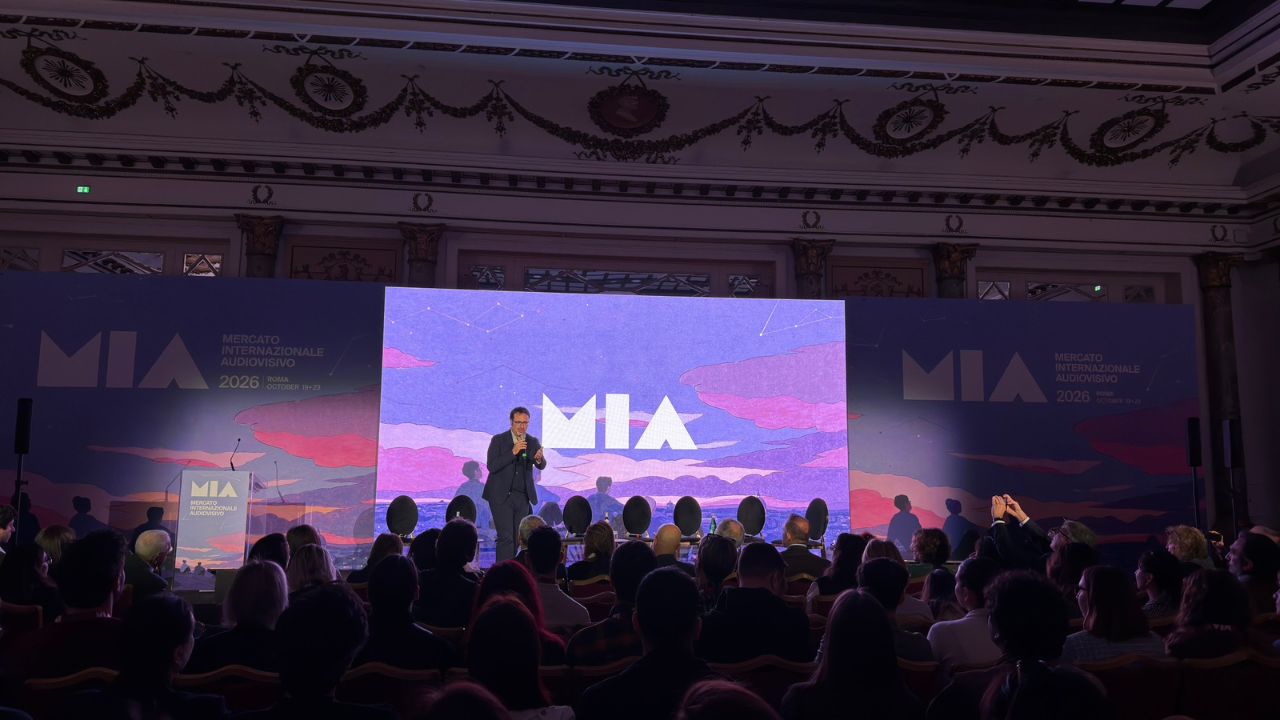
The fight against audiovisual piracy and the protection of copyright remain key challenges for the content industry, which must adapt to changing consumption habits, evolving distribution models, and the new opportunities and challenges posed by artificial intelligence.
These were the key topics addressed during the final talk, “Back to the Future. It’s All About the Story,” at the MIA – Mercato Internazionale Audiovisivo, which focused on the role of FAPAV and strategies to combat the illegal distribution of content and protect creative work.
The discussion also highlighted the importance of understanding how audiences’ ways of accessing audiovisual content are changing. According to figures presented during the event, a survey of approximately 7,000 respondents found that 15% of reported viewing habits could be attributed to piracy. This figure underscores the impact of illegal consumption and the need to make legal content increasingly accessible, recognisable, and competitive.
The topic was explored from different perspectives through contributions from Margherita Amedei, Cinema & Series Director at Sky Italia, Beatrice Arena, Head of Content Acquisition at CHILI, Liz Bales, Chief Executive of BASE and DEGI, Alberto Bolognesi, Head of Business Affairs, Rights Acquisition and Sales at Mediaset, Elena Capparelli, Director of RaiPlay and Digital, Charlotte Lund Thomsen, Legal Counsel at IVF – International Video Federation, Luciana Migliavacca, President of Univideo, and Riccardo Tozzi, CEO & Chief Creative Officer at Cattleya.
The discussion highlighted the transformation of the market, where cinemas, television, streaming platforms, and digital rental and purchase services coexist. In this context, protecting content also means guiding audiences towards legal ways of accessing it through a diverse offering and awareness-raising campaigns.
Among the tools discussed was Piracy Shield, the system designed to combat the illegal distribution of online content, as part of broader efforts to restrict the unauthorised circulation of protected works. Alongside technical and regulatory measures, the importance of public awareness and communication was also emphasised. Notes from the event highlighted a promotional initiative featuring digital titles that reportedly achieved a 300% increase in sales during the campaign week, illustrating the potential of initiatives that encourage users to turn to official channels.
Particular attention was also given to artificial intelligence and the protection of creative works in the age of new technologies. In this context, Riccardo Tozzi, producer at Cattleya, highlighted the importance of safeguarding creative work in relation to the use of AI. The potential use of audiovisual works and materials to develop new content raises questions about copyright compliance and the protection of the rights of authors, producers, and industry professionals. The debate on legality therefore extends beyond traditional piracy, requiring the industry to address new forms of content use and the need for appropriate rules and safeguards in response to technological developments.
The MIA’s final talk brought a fundamental issue for the future of the audiovisual industry back into focus: ensuring that innovation and changing consumption models evolve in a way that respects the rights of those who create and produce content. Combating piracy requires a shared approach that combines technological tools, regulatory measures, public awareness, and cooperation between industry players, platforms, and institutions. Copyright protection is not only a means of safeguarding businesses’ economic interests, but also an essential condition for supporting cultural production and recognising the value of creative work.
Photo Credits: ©2026 Mia — Courtesy of Mia



