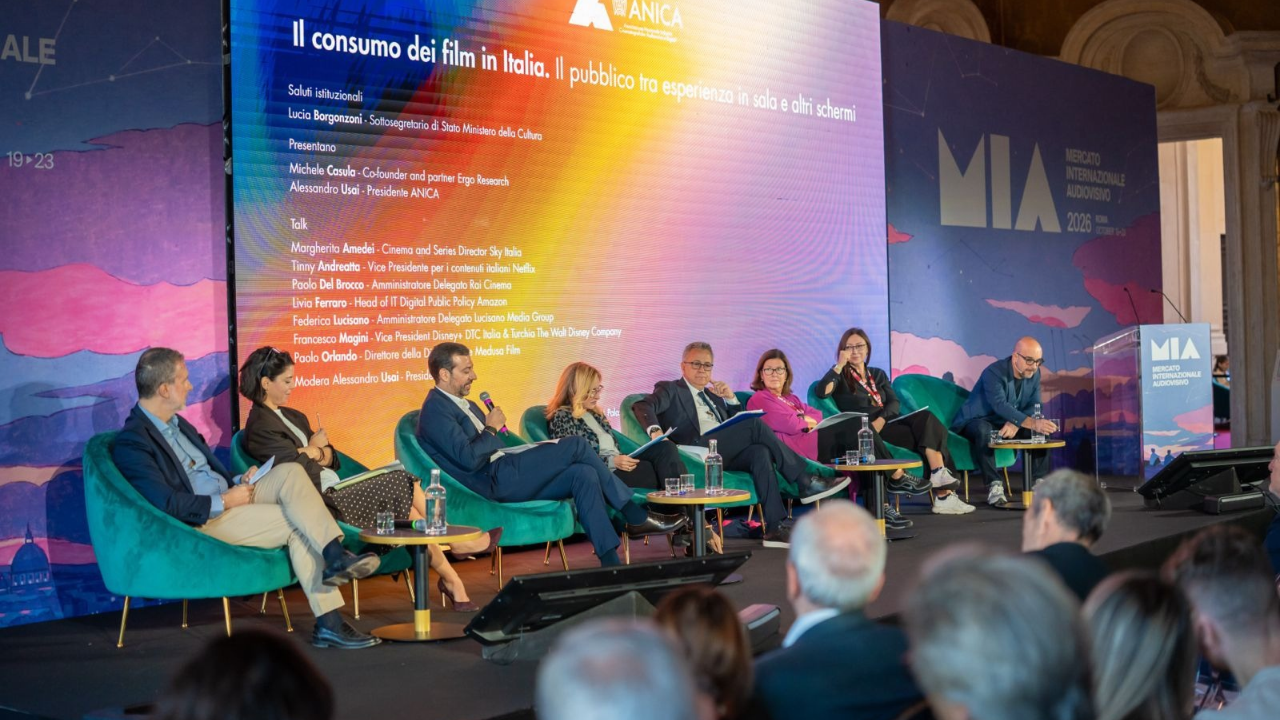
The Sala Pietro da Cortona hosted a conference organized by ANICA, focusing on film consumption through paid services in Italy. The research, conducted by ERGO Research, examined audience viewing habits, with particular attention to Italian productions and the relationship between movie theaters and streaming platforms.
The speakers included Michele Casula (Co-founder and Partner, ERGO Research) and Alessandro Usai (President, ANICA), who presented the study’s main findings.
Casula presented data collected during a four-week experimental observation period, providing a snapshot of viewing habits and differences between distribution channels. Usai focused on the various distribution windows, from theatrical releases to linear and non-linear pay-TV services, distinguishing between premieres and catalog titles, both Italian and international.
The research highlights the importance of theatrical releases for Italian cinema, showing how films can continue to reach audiences through subsequent distribution channels. Viewing habits also vary according to age groups and audience preferences.
The second part of the conference featured a discussion among Margherita Amedei (Sky Italia), Tinny Andreatta (Netflix), Paolo Del Brocco (Rai Cinema), Livia Ferraro (Amazon), Federica Lucisano (Lucisano Media Group), Francesco Magini (The Walt Disney Company), and Paolo Orlando (Medusa Film).
The discussion highlighted how box-office success can help extend a film’s life cycle. Tinny Andreatta drew attention to titles such as There’s Still Tomorrow (C’è ancora domani) and Diamonds (Diamanti), which continued to attract interest after their theatrical releases, finding new viewing opportunities on streaming platforms.
It was also emphasized that not all Italian productions achieve the same results. For this reason, project selection and development must take into account the characteristics of each film and the audiences it aims to reach.
Another topic concerned the relationship between theaters and streaming when sequels, remakes, and reboots are released. The launch of a new installment can reignite interest in earlier films, as in the case of Zootopia 2, which helped draw renewed attention to the first film, leading to an increase in views on Disney+.
Among the findings presented, approximately 70% of viewing sessions for new releases on streaming platforms involve films that have already been shown in theaters. For Italian productions, this figure rises to 92%. These numbers demonstrate how theatrical distribution can contribute to the subsequent circulation of films, strengthening the connection between different distribution windows.
The discussion therefore highlighted the need to move beyond the perceived opposition between cinema and streaming, recognizing the complementary role of different channels in reaching audiences and enhancing the value of Italian productions. The importance of developing shared, transparent measurement tools also emerged, helping provide a more comprehensive picture of audiovisual consumption.
The meeting concluded with closing remarks by Lucia Borgonzoni, who reaffirmed the artistic value of cinema and the importance of the work carried out by everyone involved in making a film. A motion picture is the result of a lengthy creative and production process, beginning with development and continuing through the various stages of distribution and promotion.
Finally, Borgonzoni condemned piracy, emphasizing the need to protect the value of films and the work of industry professionals, while recognizing cinema as an artistic expression and the product of a collective effort.
Photo Credits: ©2026 Mia — Courtesy of Mia



