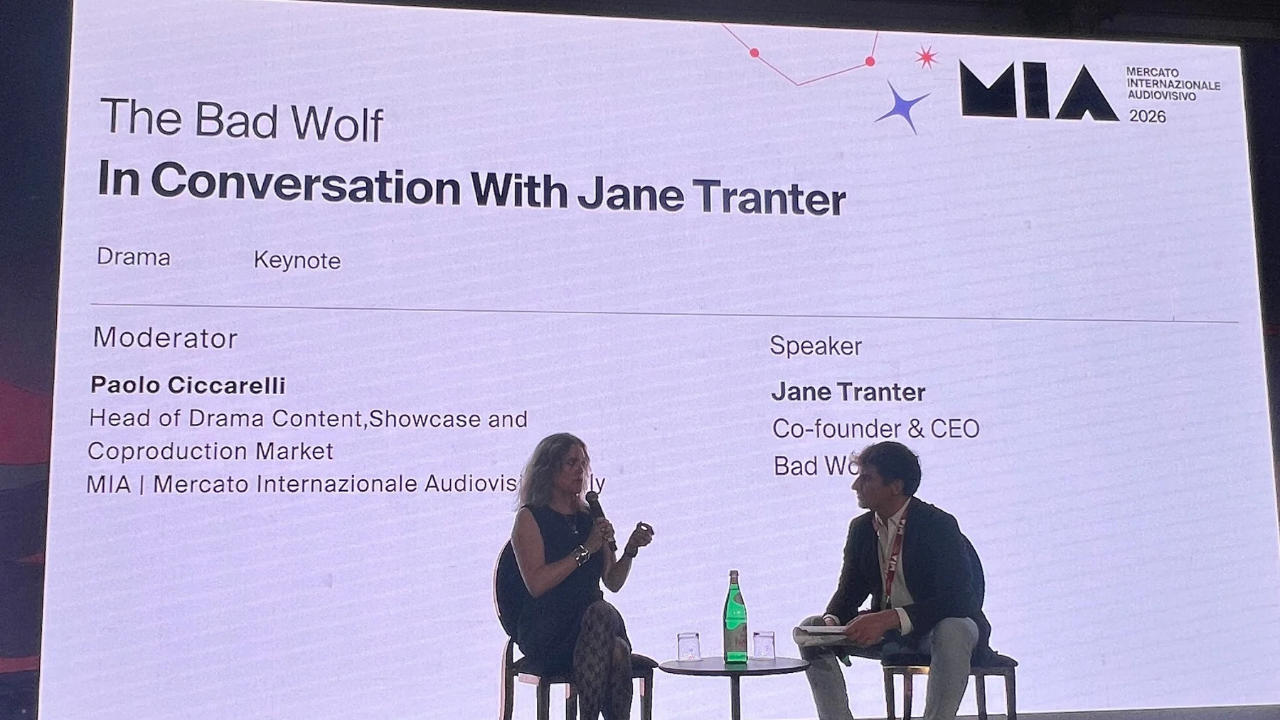
The 2026 edition of MIA – Mercato Internazionale Audiovisivo hosted Jane Tranter, CEO and founder of Bad Wolf, a British independent production company established in 2015 and based in Wales. The event, held in the Winter Garden Room at The Westin Excelsior and moderated by Paolo Ciccarelli, retraced the career of one of the most influential figures in British television.
After beginning her career at the BBC in 1985, Tranter went on to hold positions of increasing responsibility, contributing to the development of productions such as Doctor Who, The Night Of, His Dark Materials and Succession. During the talk, she explained how her vision has always been driven by the desire to create inclusive stories capable of reaching a broad and diverse audience. One of the most significant examples was the revival of Doctor Who, conceived as a show capable of engaging multiple generations. Her collaboration with screenwriter Russell T Davies was crucial: he was chosen for his ability to respect the series’ original spirit while introducing contemporary themes.
Tranter also discussed the making of The Night Of, the US adaptation of Criminal Justice, highlighting director Steven Zaillian’s contribution to building narrative tension through precise direction and close attention to detail. Another key topic was His Dark Materials, the adaptation of Philip Pullman’s trilogy. Having waited a long time for the opportunity to bring the novels to the screen once again, Tranter identified changes in the television landscape — including the success of Game of Thrones and the arrival of film directors in serial productions — as the conditions that made a project of this scale possible.
Her experience in both the United Kingdom and the United States contributed to the creation of Bad Wolf and to the decision to invest in Wales, with the aim of establishing an international production hub, promoting local talent and generating long-term professional opportunities. The discussion thus revealed a vision of television production in which creative ambition, industrial strategy and audience engagement are closely intertwined, demonstrating how the success of a series also depends on the ability to create new opportunities for the people and communities involved.



