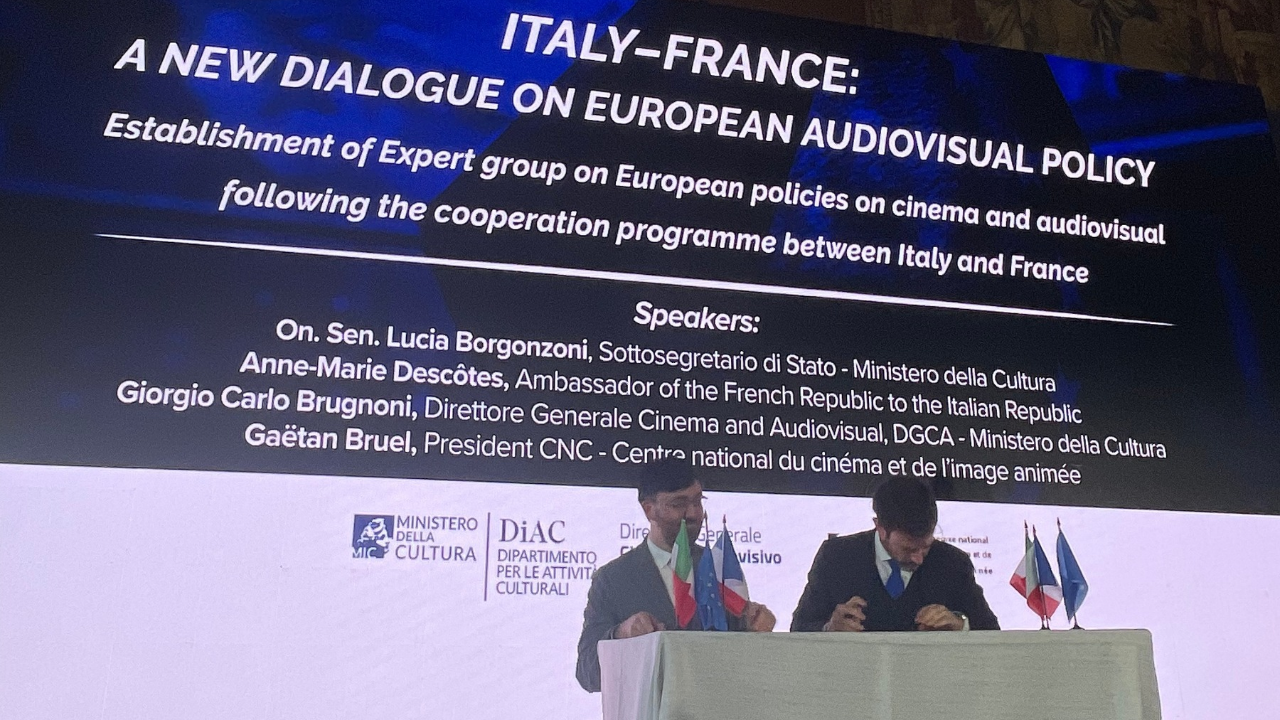
The conference “Italy-France: A New Dialogue on European Audiovisual Policy” took place in the Sala Pietro da Cortona, focusing on the importance of cooperation between Italy and France in economic models, European audiovisual policies and the development of co-production models.
The initiative marks a further step towards strengthening cultural relations between Italy and France, following the agreement signed in Antibes on 25 June 2026 by Alessandro Giuli and Catherine Pégard, heads of their respective Ministries of Culture. The agreement aims to promote new synergies and development opportunities in the film and audiovisual sectors through a bilateral committee.
Following introductory remarks by Gaia Tridente, the conference speakers were introduced: Lucia Borgonzoni (Undersecretary of State at the Ministry of Culture), Giorgio Carlo Brugnoni (Director General for Cinema and Audiovisual), Gaëtan Bruel (President of the CNC) and Anne-Marie Descotes (French Ambassador to Italy).
Lucia Borgonzoni highlighted the importance of cooperation between Italy and France, emphasising the role of bilateral agreements in strengthening the strategic value of a shared European vision for the audiovisual industry. The aim is to support the film sector by placing creativity and artistic expression at its heart, in a context increasingly shaped by globalisation and artificial intelligence.
Anne-Marie Descotes, French Ambassador to Italy, highlighted the importance of the Quirinal Treaty in consolidating cooperation between the two countries. She stressed the need to turn cultural and professional ties into concrete initiatives to address the challenges facing the European audiovisual sector.
Giorgio Carlo Brugnoni, Director General for Cinema and Audiovisual, reaffirmed the strategic role of Italian-French co-productions and the need for a shared position on key European policy issues, from protecting independent production to supporting the future AgoraEU programme. He also emphasised the importance of film literacy and the promotion of cinematographic heritage.
Gaëtan Bruel, President of the CNC, drew attention to the transformations taking place in the audiovisual market and the proposal to reduce the AgoraEU budget by 30%, highlighting the need for adequate resources to support creativity and European cultural diversity. He also reaffirmed the shared commitment to strengthening co-productions and cooperation between the industries of the two countries.
The conference concluded with the signing of the bilateral cooperation protocol and the launch of the Italian-French committee of experts, tasked with developing joint proposals on European audiovisual policies and contributing to the definition of future strategies for the sector.



