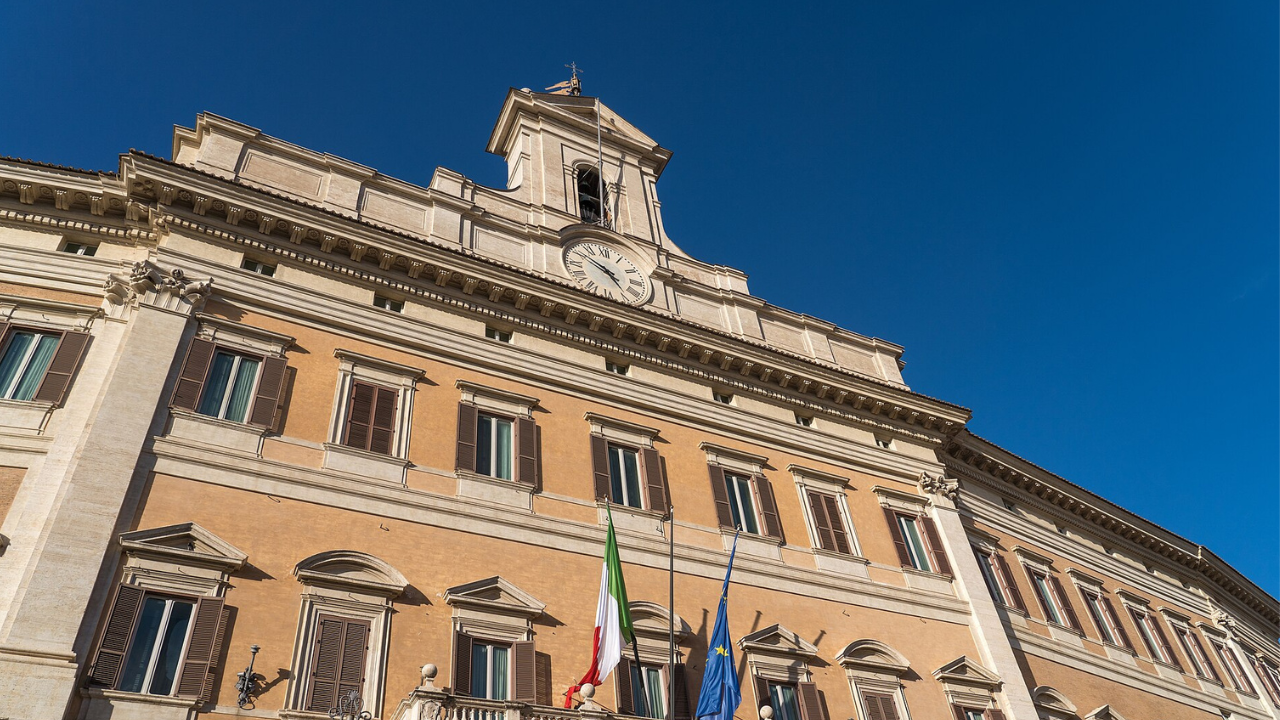
In a vote that brought together all political sides (218 in favor, 6 against, no abstentions), the Chamber of Deputies gave initial approval to a bill that redefines the organization, funding, and safeguards for the film and audiovisual industry.
Culture Minister Alessandro Giuli views it as an achievement made possible by the joint effort of different political forces, opening an unprecedented phase of cooperation between institutions and industry stakeholders.
Among the most significant changes is the creation of a new Agency for Cinema and Audiovisual, which will take over the administrative and operational functions currently handled by the Ministry of Culture’s Directorate-General for Cinema and Audiovisual. The Ministry itself will retain strategic oversight and policy-setting functions. Planning will also shift to a three-year cycle, aimed at giving the sector greater stability and predictability.
The tax credit system will likewise be revised, with criteria based on company size, the artistic value of productions, and the appropriateness of costs.
On the labor front, the reform seeks to modernize welfare and social security coverage for those working in the industry, with particular attention to workers facing economic hardship, for whom a solidarity fund will be established. A new permanent forum, the Cinema and Audiovisual Forum, will also be created to directly involve industry professionals in shaping public policy.
Political reactions have been largely positive. Deputy Minister Lucia Borgonzoni cited encouraging figures from 2026, with box office revenue up more than 20% compared to pre-pandemic levels and a notable rise in audiences for Italian films, noting that Italy is the only major market to have already recovered pre-Covid figures. Fabio Roscani of Brothers of Italy described the reform as a long-awaited change for the sector. The Democratic Party also signaled support, with party leader Elly Schlein acknowledging cinema’s cultural value for the country, while calling for guaranteed funding in the upcoming budget law. Noi Moderati also expressed approval, with Ilaria Cavo highlighting the economic and employment weight of a sector worth billions of euros and involving tens of thousands of workers.
The bill now moves to the Senate, where the final framework of the new rules for the entire film industry will be decided.
Photo Credits: Alexkom000 on Wikimedia Commons



